
Jonathan’s Protective Panic
Dark Lies the IslandJonathan’s affection for Ellie becomes inseparable from possessiveness, and his attempts to manage her adolescent relationships intensify his mental-health crisis.
increasing Bearing strength in each event
 decreasing
Bearing strength in each eventdecreasingThe Teenager in the House
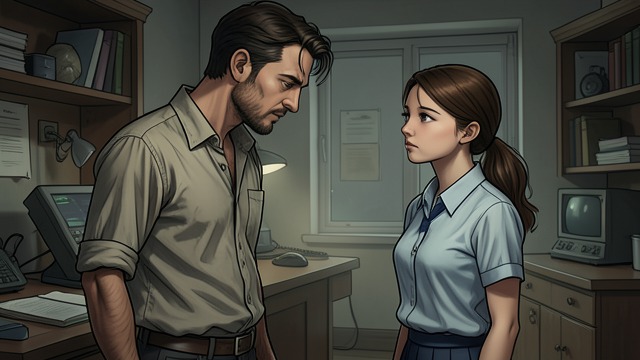
Recognition and Alarm
A daughter resembles her mother
Jonathan sees Ellie’s appearance and manner as an echo of Saoirse at seventeen. He acknowledges that the resemblance troubles him, but his repeated insistence that it is normal exposes how difficult he finds the thought.
Ellie’s clothing, speech, and confidence make her seem both familiar and beyond his control. Jonathan’s account transforms ordinary adolescent independence into a series of provocations.
A father’s fear
He describes the boys around Ellie as potential threats, though he admits that most have been harmless. His desire to protect her is sincere but already mixed with an obsession about who she is becoming.
The narrative’s comic, self-conscious voice makes his discomfort visible without making it harmless. Jonathan’s fear lays the groundwork for the confrontation that follows.
The Graffiti on the Shelter
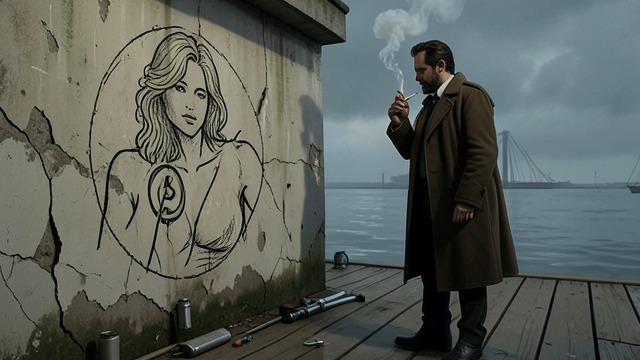
Humiliation in Public
An insult on the wall
Jonathan discovers graffiti calling Ellie a sexualized nickname and using the initial of his surname. The message feels like a public attack on both his daughter and his own identity.
He walks the pier repeatedly, smokes, and cries while imagining what neighbors think of his mental state. His reaction grows beyond the insult itself, becoming another sign that ordinary social pressures are destabilizing him.
A family disagreement
Saoirse asks whether Ellie should be confronted, but she refuses to treat teenage sexuality as a crisis. She reminds Jonathan that she herself was sexually active at seventeen, a truth he finds difficult to hear.
Their argument reveals different parental responses: Saoirse accepts the daughter’s emerging adulthood, while Jonathan tries to regain control through moral language. His distress turns a humiliating scribble into a reason to act against Aodhan.
The Warehouse Threat
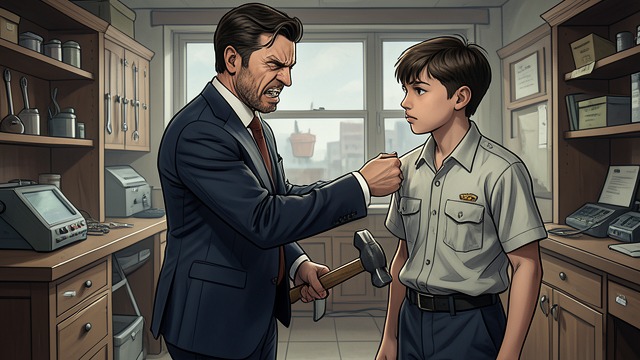
Violence in the Drylining Aisle
A confrontation disguised as counsel
Jonathan corners Aodhan at work and begins with an attempt to speak honestly about teenage sex. The conversation rapidly becomes a threat: he calls Ellie an angel and warns that he will kill Aodhan if the boy hurts her.
He slaps Aodhan and describes his own mental distress, using disclosures about past visions to frighten the teenager. His apparent concern for Ellie becomes a performance of power.
Consequences in the car park
Jonathan orders Aodhan to repaint the rugby shelter and leaves the shop with a ladder and hammer. He removes the sign’s exclamation mark and smashes it slowly on the pavement, absorbed in the act until a police car arrives.
The confrontation marks the point at which his private panic becomes public violence. He may believe he is defending Ellie, but his behavior places the family and himself in a new crisis.
When Ellie turns seventeen
During the summer relationship with Aodhan McAdam
The following Saturday, at Do-It-Rite!
